By Cohort 2 Intern (Samia Fahim)
Autism Spectrum Disorder (ASD) presents a wide range of social, communication, and behavioral differences, making personalized diagnosis and treatment particularly challenging.[1] Before the integration of Artificial Intelligence (AI), families often experienced diagnostic delays of four to five years, because of which they would miss the crucial early intervention period before the age of four, when the brain is most responsive to therapy. Traditional interventions, such as Applied Behavior Analysis (ABA), were sometimes expensive, time-intensive, and difficult to tailor to each child’s unique needs. Children with ASD also had the potential to experience sensory overload during human-led therapy sessions, reducing engagement and learning outcomes. Additionally, the double empathy problem, where autistic and non-autistic individuals struggle to understand each other’s perspectives, created further barriers to effective social communication and therapy.
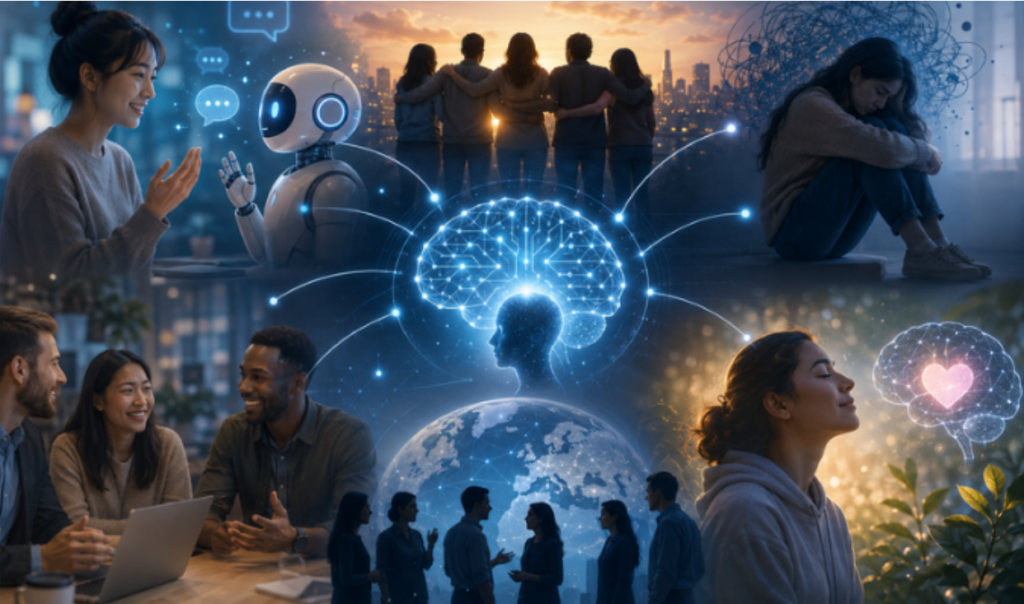
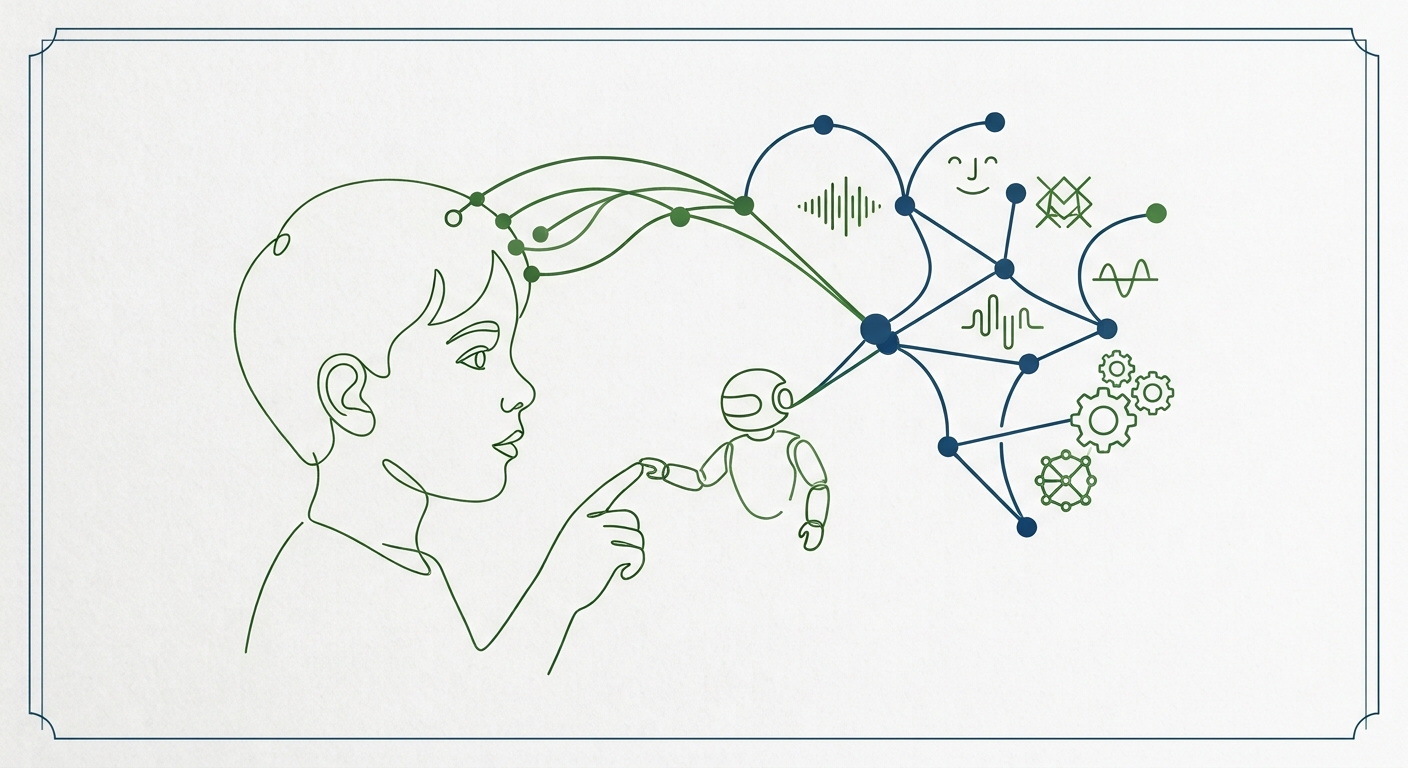
AI may be able to fundamentally transform ASD care by introducing computational behavioral phenotyping, socially assistive robotics, and generative AI technologies. As an example of what the future might hold, AI-powered screening platforms such as NeuralClinic AI analyze home videos of children’s behavior to generate risk-scored summaries for clinicians, significantly reducing the time between initial concern and diagnosis.[2] Advanced facial expression and voice analysis models can also identify autism-related behavioral markers with reported accuracies approaching 99% in controlled studies. In therapy, socially assistive robots such as NAO, Milo, and Kaspar provide predictable, structured, and non-judgmental interactions that help children develop joint attention, imitation, emotional recognition, and social communication skills.[3] More recently, integrating robots like Pepper with large language models such as ChatGPT has enabled natural, real-time conversations, allowing children to practice turn-taking, emotional understanding, and conversational skills in a safe and engaging environment.[4]
The global impact of AI-assisted interventions has been promising, with studies reporting improvements of up to 40% in theory of mind — the ability to understand the thoughts and emotions of others—compared with conventional therapy alone. Wearable technologies such as “Superpower Glass” further enhance social engagement by recognizing facial expressions and predicting emotional overload, enabling caregivers to intervene before any incidents occur and reducing caregiver stress.[1] Despite these advances, important challenges remain. Researchers continue to investigate whether skills learned through robot-assisted therapy successfully transfer to everyday human interactions, as most current studies involve relatively small participant groups and short evaluation periods. Ethical concerns, including excessive dependence on robotic companions, data privacy, and algorithmic bias across diverse cultural and ethnic populations, also require careful attention.[4] Future AI systems must therefore prioritize long-term effectiveness, fairness, and human-centered design to ensure that technological innovation translates into meaningful improvements in the lives of individuals with ASD and their families.[1]
References
[1] S. Alshahrani, “The Impact of AI-Mediated Therapy on Treatment Outcomes in Autism Spectrum Disorder: A Systematic Review,” J. Evid.-Based Psychother., vol. 25, pp. 71–101, Sep. 2025, doi: 10.24193/jebp.2025.2.12.
[2] A. Alberca-González and E. Fernández-Jiménez, “Artificial intelligence support for diagnosis of neurodevelopmental disorders during childhood: an umbrella review,” Front. Psychiatry, vol. Volume 17-2026, 2026, doi: 10.3389/fpsyt.2026.1697185.
[3] M. Nadeem, J. M. H. Barakat, D. Daas, and A. Potams, “A Review of Socially Assistive Robotics in Supporting Children with Autism Spectrum Disorder,” Multimodal Technol. Interact., vol. 9, no. 9, p. 98, 2025, doi: 10.3390/mti9090098.
[4] F. Bertacchini, F. Demarco, C. Scuro, P. Pantano, and E. Bilotta, “A social robot connected with ChatGPT to improve cognitive functioning in ASD subjects,” Front. Psychol., vol. Volume 14-2023, 2023, doi: 10.3389/fpsyg.2023.1232177.
Editorial Note: This blog was developed as part of a intern training task by a Cohort 2 intern at the Discover Psychology Foundation and is featured in the Intern Works Exhibition.