By Nishwah Nadeem (Research Writer)
Introduction
Most people have been told at some point that they need better work-life balance. The phrase gets thrown around a lot, in HR meetings, in wellness newsletters, in conversations with friends who look tired. But when you actually try to define where work ends and life begins, the line gets harder to find than anyone admits. For some people it is a scheduling problem. For others it is a values problem. And for a growing number of people, especially those who do work they find genuinely meaningful, it stops being a problem to solve and starts being a question to sit with.
This article looks at what psychology actually says about healthy workplaces and work-life balance: what makes a workplace psychologically safe, what burnout is and how it develops, why the boundaries between work and personal life are harder to maintain than they used to be, and what it means when work is not just something you do for money but something you do because you genuinely care about it. The answer is not the same for everyone, and the research reflects that.
What Makes a Workplace Psychologically Healthy
A psychologically healthy workplace is not simply one where people are not actively suffering. The research suggests it is a more active condition: an environment where people feel engaged, recognized, supported, and able to do their work without chronic stress eroding their health over time.
Gallup’s 2024 research with over 4,400 U.S. employees found that when employees strongly agreed they knew what was expected of them at work, they were 47 percent less likely to experience frequent burnout and 23 percent less likely to struggle with work-life balance on a regular basis (Gallup & Workhuman, 2024). That is a striking finding because it suggests that clarity, not perks or wellness programmes, may be one of the most protective factors in a workplace. Ambiguity about roles and expectations creates chronic background stress that may be easy to overlook precisely because it does not feel like a specific event.
Recognition matters too, in ways that may go beyond what many organizations assume. The same Gallup research found that employees who strongly agreed their organization’s culture valued recognition were 4.2 times as likely to agree that their employer cared about their overall wellbeing. Only 37 percent of employees in the study said they received recognition for non-work-related accomplishments, such as life events or community involvement. That gap between how employers think they support people and what employees actually experience seems to be a consistent feature of workplace wellbeing research.
Wider data from 2024 and 2025 paints a concerning picture of how most workplaces are performing against these standards. A Wellhub survey found that work stress had become the number one cause of declining mental health among employees, surpassing financial stress and anxiety about AI (Wellhub, 2025). Only 31 percent of U.S. employees were actively engaged at work in 2024, the lowest figure in a decade. Global engagement sat at 21 percent. Over 40 percent of employed adults reported fearing retaliation if they took time off for mental health reasons, even when they knew how to access care (HR.com, 2025). These numbers describe something fairly far from a psychologically healthy norm.
Burnout: What It Is and Why It Matters
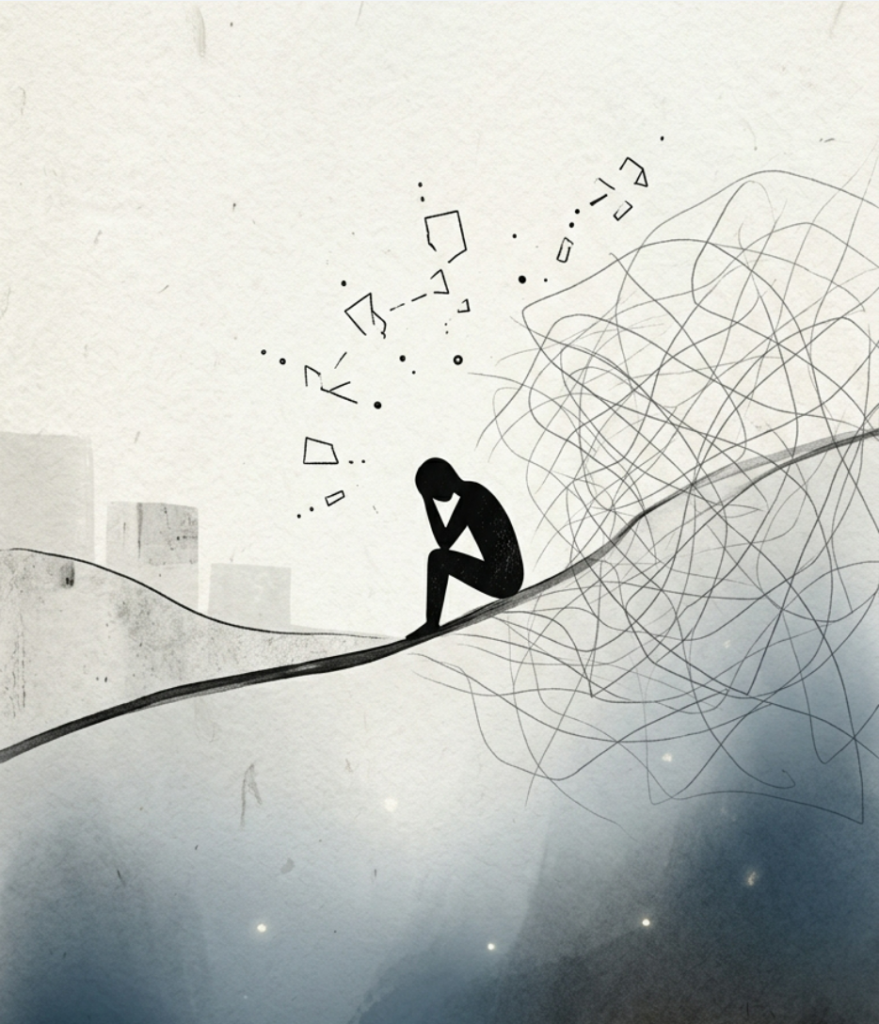
Burnout is the end point of the process that unhealthy workplaces produce. The most widely used psychological definition comes from researcher Christina Maslach, who characterized burnout as a prolonged response to chronic emotional and interpersonal stressors on the job, marked by three dimensions: emotional and physical exhaustion, cynicism or psychological detachment from work, and a reduced sense of personal effectiveness (Maslach et al., 2001). The World Health Organization formally recognized burnout as an occupational phenomenon in the International Classification of Diseases in 2019 (WHO, 2019).
“Burnout isn’t a medical condition. It’s a response to chronic job stressors that have not been successfully managed in the workplace.” — Christina Maslach
That framing matters. Burnout is an organizational problem, not a personal failure, and treating it as though individuals need to simply be more resilient misses where the responsibility actually lies. The sources of burnout that Maslach and Leiter (2016) identify include work overload, lack of control, inadequate recognition, breakdown of community, perceived unfairness, and value conflicts. None of these are primarily about individual psychology. They are about the structures and cultures people work inside of.
The scale of burnout is not small. Fifty-nine percent of U.S. employees reported experiencing burnout in 2024. HR.com’s 2025 research found that an overwhelming workload was cited by 62 percent of employees as a top stressor, followed by financial stress at 55 percent and poor work-life balance at 52 percent. These figures suggest that burnout is not an edge case but a widespread feature of how modern work is organized.
The Blurring of Boundaries: Why Work-Life Balance Is Harder Now
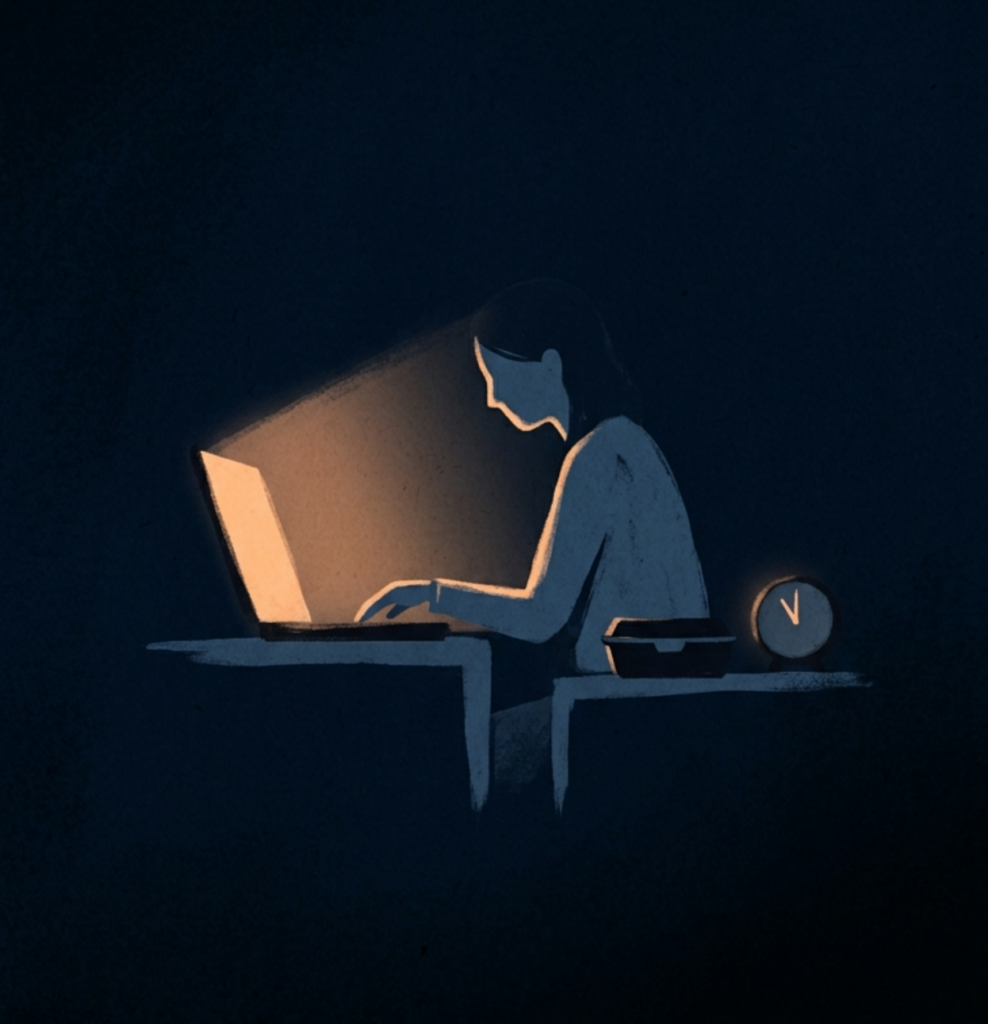
The concept of work-life balance assumes there is a boundary to maintain. For much of the twentieth century, that boundary was partly enforced by physical separation: you went to an office, you came home, the two worlds did not overlap much. That separation has been steadily eroding for decades, and the COVID-19 pandemic accelerated it sharply. Remote and hybrid work brought the office into the home, and for many people the boundary between professional and personal life became harder to locate than ever.
Research from the Netherlands found that blurred work-life boundaries predicted reduced happiness through a pathway of increased emotional exhaustion (van der Lippe & Lippényi, 2020). This finding held even when other factors were controlled for, suggesting that boundary blurring may be independently harmful rather than simply a marker of overwork. When the physical and temporal signals that used to separate work from rest disappear, many people find it psychologically difficult to switch off, which means recovery time shrinks and exhaustion accumulates.
Technology may compound this. Research on after-hours work communication found that employees who regularly receive and respond to work messages outside regular hours experience higher work-life conflict and greater psychological pressure, with continuous connectivity through digital devices emerging as a significant pathway to burnout. Only 40 percent of employees in recent surveys said they felt their employer respected their time off and personal boundaries (HR.com, 2025). The right to disconnect, increasingly being addressed through legislation in some countries, reflects a growing recognition that the boundary between work and personal time may need to be actively protected rather than left to individual willpower.
When Work Is Your Passion: A Different Kind of Boundary Problem
There is a version of the work-life balance conversation that the research has only recently begun to examine properly: what happens when work is not just a job but something a person genuinely cares about? For people who are passionate about what they do, the advice to simply switch off and leave work at work does not map onto their experience very well. The question of where work ends and life begins may have a genuinely different answer for them.
Psychology’s dualistic model of passion distinguishes between harmonious passion, where a person freely chooses to engage with their work and can set it aside when needed, and obsessive passion, where the work feels compulsive and bleeds into everything regardless of choice. Research has found that obsessive passion for work is a significant predictor of work-family conflict, which in turn escalates the risk of burnout (Huyghebaert-Zouaghi et al., 2022). The problem may not be caring deeply about work but the compulsive quality of the engagement, whether a person feels they can stop when they need to or whether the work follows them everywhere uninvited.
Research on meaningful work adds another layer. A qualitative study found that people who find their work deeply meaningful often describe it as a bottomless pit: there is always more to do, and the fact that it matters makes it harder rather than easier to step away from (Rosso et al., 2010). One participant in that research described their work as something they could do 24 hours a day and never sleep. Meaningful work, the research suggests, can distract from and reduce engagement in other life domains, including family time and self-care, and it can be hard to prevent people from overworking when they find their work genuinely significant.
Personally, this is where I find the conventional work-life balance advice least useful. I think work can be your life when it is driven by genuine passion, and that the boundary between them does not need to look the same for everyone. The issue, as the research reflects, is less about how much time a person spends on work and more about whether that engagement remains chosen and sustainable, or whether it tips into something compulsive that leaves no room for recovery. Passion is protective up to a point. The point it stops being protective is when a person can no longer freely choose to put the work down.
What the Research Says Actually Helps
Across the research on workplace wellbeing, a few factors consistently emerge as protective. Clarity about what is expected at work appears to be one of the most underrated. Flexible work arrangements, including remote and hybrid options, are associated with better mental wellbeing for most employees, with 80 percent of workers in recent surveys saying that hybrid or remote options improved their mental health (HR.com, 2025). Autonomy, the degree to which people have meaningful control over their work, seems to matter across job types and sectors.
Mindfulness-based interventions have shown some benefit in workplace contexts, particularly for reducing stress and supporting recovery between work periods. Research applying the Job Demands-Resources model has found that personal resources like mindfulness can help buffer the negative effects of high job demands, though the evidence also consistently suggests that individual-level interventions work better when they sit alongside organizational change rather than substituting for it (Zivnuska et al., 2021). Telling someone to meditate while leaving the structural conditions of burnout unchanged addresses the wrong level of the problem.
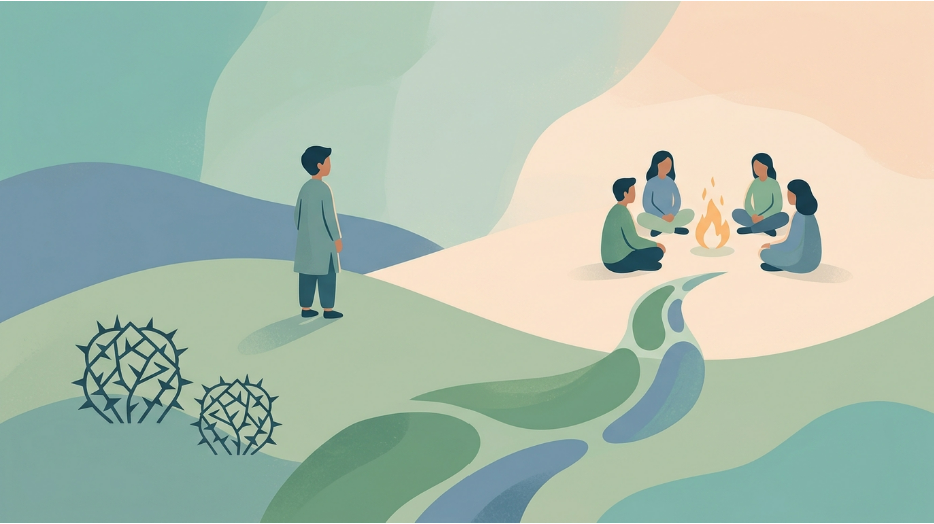
Social support within the workplace also appears to be protective. Work that is done in isolated conditions, whether geographically or interpersonally, tends to produce worse wellbeing outcomes. The sense of being part of a community at work, of being known by colleagues rather than just productive, may be one of the less quantifiable but more important features of a psychologically healthy environment.
Conclusion
The question of where work ends and life begins does not have a single answer, and the research does not pretend it does. For most people, maintaining some meaningful separation between work and personal time seems to be important for wellbeing, particularly when work is stressful, demanding, or not especially meaningful to them. For people who find their work genuinely important, the line may be both harder to draw and less urgently necessary to draw, but even then the research suggests that the ability to recover, to step away when needed, and to maintain relationships and activities outside work remains important for sustaining long-term engagement rather than sliding into burnout.
What is clearer in the research is what a psychologically healthy workplace actually requires: clarity, recognition, fair treatment, some degree of autonomy, and a culture that does not treat chronic overwork as a badge of honour. Most workplaces are not currently meeting those standards. That is not a personal failure of the people working in them. It is a structural problem that requires structural responses, from organizations, from policymakers, and from a broader culture that has spent decades confusing exhaustion with dedication.
References
Bakker, A. B., & Oerlemans, W. G. M. (2016). Momentary work happiness as a function of enduring burnout and work engagement. Journal of Psychology, 150(6), 755–778. https://doi.org/10.1080/00223980.2016.1182888
Houlfort, N., Philippe, F. L., Vallerand, R. J., & Ménard, J. (2014). On passion and heavy work investment: Personal and organizational outcomes. Journal of Managerial Psychology, 29(1), 25–45. https://doi.org/10.1108/JMP-06-2012-0185
HR.com. (2025). Future of employee well-being 2025. HR Research Institute.
Huyghebaert-Zouaghi, T., Gillet, N., Fernet, C., Austin, S., & Fouquereau, E. (2022). From passion to burnout: The role of work–family conflict and job satisfaction in the workplace. Social Sciences, 14(2), 104. https://doi.org/10.3390/socsci14020104
Kniffin, K. M., Narayanan, J., Anseel, F., Antonakis, J., Ashford, S. P., Bakker, A. B., Bamberger, P., Bapuji, H., Bhave, D. P., Choi, V. K., Creary, S. J., Demerouti, E., Flynn, F. J., Gelfand, M. J., Greer, L. L., Johns, G., Kesebir, S., Klein, P. G., Lee, S. Y., … & Vugt, M. V. (2021). COVID-19 and the workplace: Implications, issues, and insights for future research and action. American Psychologist, 76(1), 63–77. https://doi.org/10.1037/amp0000716
Maslach, C., & Leiter, M. P. (2016). Understanding the burnout experience: Recent research and its implications for psychiatry. World Psychiatry, 15(2), 103–111. https://doi.org/10.1002/wps.20311
Maslach, C., Schaufeli, W. B., & Leiter, M. P. (2001). Job burnout. Annual Review of Psychology, 52, 397–422. https://doi.org/10.1146/annurev.psych.52.1.397
Pattnaik, S. C., & Jena, L. K. (2021). Mindfulness, remote work, and work–life balance during COVID-19: A study on professionals. Global Business Review. https://doi.org/10.1177/09721509211015306
Rosso, B. D., Dekas, K. H., & Wrzesniewski, A. (2010). On the meaning of work: A theoretical integration and review. Research in Organizational Behavior, 30, 91–127. https://doi.org/10.1016/j.riob.2010.09.001
Symon, G., & Whiting, R. (2019). The sociomaterial negotiation of social entrepreneurs’ meaningful work. Journal of Management Studies, 56(3), 655–684. https://doi.org/10.1111/joms.12421
van der Lippe, T., & Lippényi, Z. (2020). Co-workers working from home and individual and team performance. New Technology, Work and Employment, 35(1), 60–79. https://doi.org/10.1111/ntwe.12153
Vyas, L. (2022). New normal at work in a post-COVID world: Work–life balance and labor markets. Policy and Society, 41(1), 155–167. https://doi.org/10.1093/polsoc/puab011
Wellhub. (2025). State of work-life wellness 2025 report. Wellhub Research.
World Health Organization. (2019). Burn-out an occupational phenomenon: International classification of diseases. WHO.
Zivnuska, S., Kacmar, K. M., Ferguson, M., & Carlson, D. S. (2021). Mindfulness at work: Resource conservation in the JD-R model. Journal of Applied Psychology, 104(7), 1150–1165.
Gallup & Workhuman. (2024). Empowering workplace wellbeing: Research on recognition, goals, and employee thriving. Gallup Press.