
By Umama Arshad | Discover Psychology Literary Competition & Exhibition of Works 2026
When Ammi turned sixty, everyone bought her sensible things.
A shawl.
A pressure cooker.
A blood-pressure machine.
Her eldest daughter bought her a soft pair of slippers and said, laughing, “Now you need these more than
heels.”
Everyone laughed.
Ammi laughed too.
She had learned that laughter was sometimes easier than explanation.
For years, she had wanted to learn how to swim.
Not properly. Just enough to enter water without fear.
But there was always something else.
Children.
Work.
Money
A husband who disliked unnecessary things.
A daughter who needed school fees.
A mother who needed care.
Swimming remained one of those tiny desires that never became important enough to justify itself.
On her sixtieth birthday, her granddaughter asked her,
“Nani, what do you want?”
Ammi almost said, “Nothing.”
Instead, she surprised herself.
“A swimming lesson.”
The room went quiet.
Then her son laughed.
“Swimming? At sixty?”
There it was.
Not cruelty.
Not even disbelief.
Just the old familiar sentence dressed differently.
At sixty, you don’t begin.
At sixty, you manage.
You adjust.
You accept.
That night Ammi stood in front of the mirror.
Her body was not the body she had imagined she would have when she was young.
But it was the body that had carried four children.
It had survived illness.
Grief.
Long workdays.
Sleepless nights.
Years of putting everyone else’s needs somewhere above her own.
She placed one hand on her stomach.
“What if,” she whispered, “you can still learn?”
The first lesson was humiliating.
She was frightened.
She swallowed water.
She clung to the edge of the pool.
The instructor told her to let go.
She said no.
He smiled.
“Not today.”
Three months later, she floated without holding anything.
Her granddaughter watched from the side.
“Nani!”
Ammi laughed.
Not the polite laugh.
The childlike one.
The one nobody had heard in years.
She thought about all the things people had told her she was too old for.
Then she wondered:
How many of them had ever actually been hers to decide?
She did not become twenty again.
That was never the point.
She became sixty.
And discovered that sixty was not a sentence.
It was an age.
Nothing more.
Nothing less.
AUTHOR’S REFLECTION
Perhaps the most important part of Ammi’s story never happened in the water. It happened at the edge. The edge of the pool is a boundary, but it is also a metaphor for the boundaries we learn to place around our own lives. Nobody had written a rule telling Ammi that sixty-year-old women could not swim. There had been no law. No locked door. Only expectations: at a certain age, be sensible; at a certain age, stop taking unnecessary risks; at a certain age, you have already done what you were supposed to do. These messages can become so familiar that eventually we no longer experience them as messages from other people. They become part of the way we understand ourselves. A social expectation becomes an internal expectation. An external boundary becomes an internal one. The moment the instructor tells Ammi to let go matters because, it is the moment when she no longer has the solid edge beneath her fingers and has not yet discovered whether the water or life itself will hold and welcome her. She cannot know in advance that she will float. She can only find out by releasing the edge and wandering in the realm of uncertainty and maybe that is the key to living a meaningful life.
— Umama Arshad
About the Author
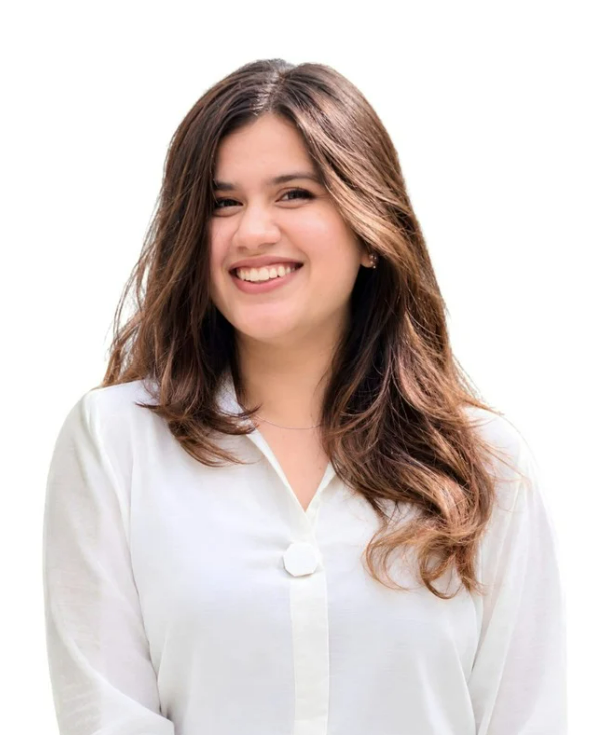
Umama Arshad | Discover Psychology Literary Competition & Exhibition of Works 2026
Umama Arshad is an Associate Clinical Psychologist.
She has been invited to more than 25 events, panels, and training sessions, including the British Psychological Society(BPS), and the Mental Health in Journalism Summit(MHJS) based in Netherlands organization by the Self Investigation.
She was a Research Assistant at UC Berkeley’s Psychophysiology Lab and works with WHO EMRO Child and Youth & EMR Stigma and Discrimination Working group and GMHAN on decriminalizing suicide. She was one of 16 selected from 300 applicants for a fully funded mental health residency in Hunza, Pakistan, organised by the Crossadders Foundation and KidsRights initiative based in Netherlands. She was also selected as one of 130 Global Changemaker Fellowship from 9,700+ applicants across 145
[Content Disclaimer: Works published under the Discover Psychology Literary Competition & Exhibition of Works 2026 are submitted by their respective authors and do not necessarily reflect the views, positions, or perspectives of Discover Psychology Foundation. These works may explore sensitive topics, themes, or experiences. Reader discretion is advised.]