By Cohort 2 Intern (Mishal Malik)
The topic of mental health is, unfortunately, often treated as something outside of people’s lived experience. However, how people with challenging experiences are viewed by society can profoundly shape how comfortable they feel either being heard or being acknowledged, let alone seeking support. A very obvious example is casually tossing the word ‘crazy’ around – labelling what someone says or does, how they may feel and/or a person who differs significantly to perceived societal norms.
While it may seem like an innocent and relatively benign word or concept, repeatedly attaching this kind of label can determine both others’ opinion and their perception of the individual themselves.
Whether we find the word offensive is less the problem; than, the capacity by attaching this label, for us to truly see the individual. After all, while mental health issues are part of a person’s experience, it is unlikely that it is the entirety of who they are.
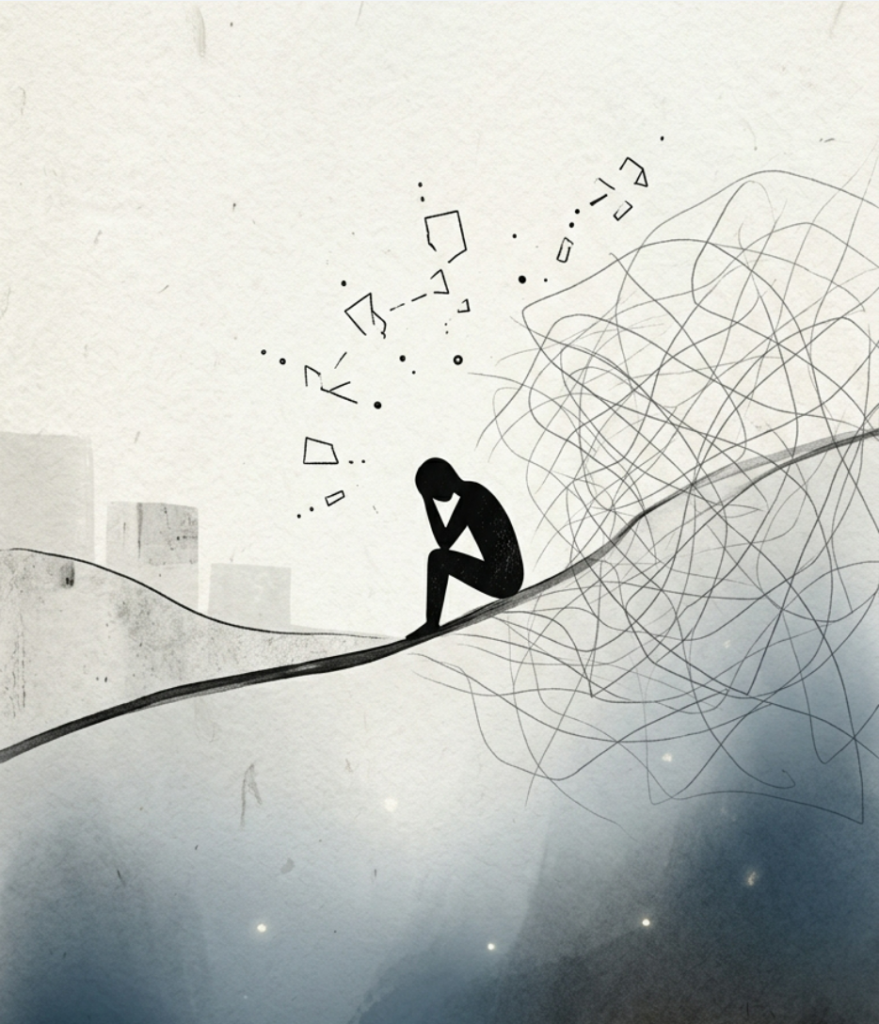
The problem when calling someone crazy, as it reduces a complex individual into one single thought. When we use the term ‘crazy,’ various associations may come to mind; perhaps that person has failed to adhere to what’s conventionally normal behaviour or communication or is even erratic, volatile or is dangerous, is unable to cope or function, etc. And perhaps this is true for the individual involved, perhaps they are indeed… none of the above, maybe this person is a son, a daughter, sibling, friend, artist, entrepreneur, scientist, student or frankly, simply just living through a difficult chapter of life, the ‘disorder’/difficulties does not overwrite that.
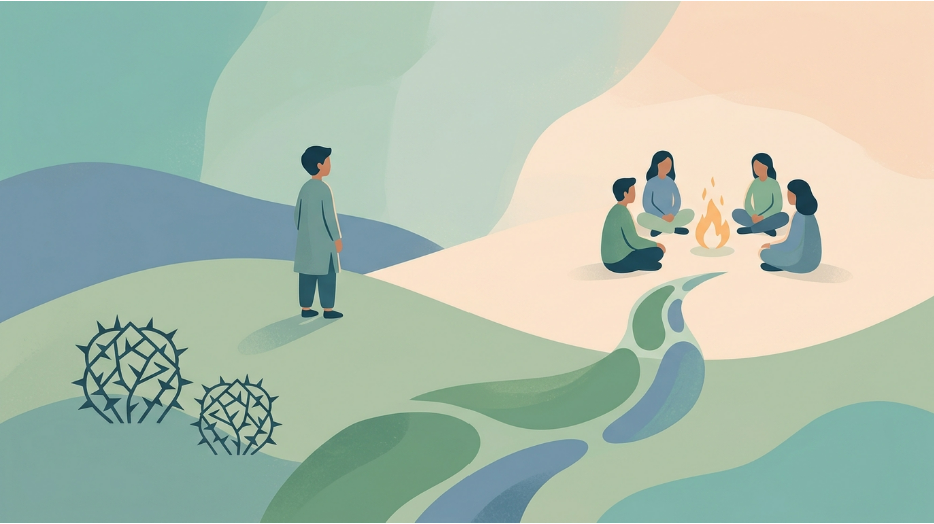
Furthermore, many a person will remain terrified at the potential prospect of being seen or labelled as crazy, to engage in publicizing a period of difficulty. Imagined conversations arise: – if I’m honest with my friends about this I’ll loose them; my parents won’t understand me and my acquaintances from the work place or at school will begin ‘looking’ differently at me, avoiding me, ostracizing me, laughing behind my back. This can particularly resonate and be deeply felt in communities or cultures for which mental health struggles are stigmatised and can be viewed as, if nothing else, an shame or source of embarrassment that should be kept buried out of the publics ‘view.
For an individual who could be benefited from advice or some level of assistance, this in itself creates a conundrum. Instead of considering, ‘i am currently experiencing challenges, and I ought to seek help or talk to somebody,’ he /she considers. ‘What would they ‘think,’ if they knew how i was feeling?
If they realize that I’m dealing with these issues?
That I should be trying more or thinking positive.’ And to a degree, all of these questions become complicated and self-criticizing, and in its complexity, can actually worsen existing mental ill health because of the associated fear of what the community can feel is ‘wrong’, what’s “abnormal”, and so, this individual may simply refrain from sharing.
Another aspect relates to us. If a person’s ‘label’, in our perspective, is ‘crazy’ our understanding of all that this ‘individual’ does filters through the’lenses’ of that label: such a person who is extremely quiet may be branded weird; someone who presents and/or displays behaviour ‘odd’ must necessarily be crazy. The individual who keeps repeating actions is purely those ‘habitual behaviors’; and it’s difficult to move beyond the label to understand why that’s happening, as much of what the human is becomes invisible to us… and to an individual living it.
For, as individuals are far more complex than single labels, the human withOCD may well be funny, clever, ambitious, caring, and hardworking.
As is the person with ‘depression who is imaginative and resilient. The woman with Anxiety may be the kindest most empathetic human being in the room, with a strong will! Her challenges with her Mental Health will Not necessarily overwrite her whole self, it will simply overlay parts of him/her, causing it to become harder for others, and most importantly for the individuals themselves to look and be able to clearly see WHO they are, if and to the extent these can actually be seen.
This is where the very definition and implications of Language play a role. Language carries meanings, and these meanings may indeed lead to further consequences. In much the same way that an observer says the thing they say without fully appreciating implications from another person’s, the notion of “crazy” may not affect one’s awareness or care for other’s but it reaffirms this mindset, or that this ‘other’, is different and somehow lesser or that mental illness is somehow more trivial than they are.
Although to rephrase and monitor one language does not imply becoming overtly concerned with every sentence uttered.
It’s simply about having a consciousness. Of the other… and maybe of what we’re saying and to whom.
Human dignity may also have to enter the conversation as an expression; everyone as a being must feel and know they are a person before a concept. However, when we create categories or labels for people we tend not to grasp how multi dimensional persons are really, we don’t ‘see’ and ‘notice’ the complexities of their being. The label is then seen, rather than person – this ‘other’. Human dignity is seen when the person is recognised for having individual, authentic thoughts, emotions and identities, their individuality-even when their experiences of it can be difficult to ourselves.
And so, how do we achieve this: ‘change’?
It is actually easier than you’d think… We just need to take some more care with what and how we communicate to individuals.
Instead of instantly ‘calling them crazy’, what may we do instead?
We would, rather, need to take some interest to understand what has actually been going on for this specific individual… In asking some questions. We listen rather than Judge; we do not ‘poke’ and joke about this. And fundamentally, we can contribute towards making an environment where if a person approaches and requests help, there will not be an implicit (if not explicit) consequence of seeming ‘unworthy or abnormal.
This effort will lead to us, our society benefit as much the “crazy” ones as us “normal” folks do. Once you take off the rose-tinted spectacles (or at the top of those lenses with the “ craziness” of folks) and accept those people you cannot quite comprehend as human; and learn to accept and deal gracefully what you do not comprehend as with respect. You realize that people are much better with one another when we show a level of regard of dignity to fellow beings — our neighbours and comrades in life that not only respect the differences in one another however celebrate their differences, in the same way the orchestra does, or a good painting composed with many colors works well, doesn’t it.
At the very least the next time we’re tempted to utter the C-word (or any similar label) before judging someone — before attaching ourselves ‘know’–it-all labels, we should have thought about our own experiences. Would we, ideally have wanted to have an individual ‘lump’ the entirety of the circumstances we are in into one of label. We certainly would, ideally have not.
For us this “would give rise to the best of what would have happen when there’s concern”.
Just like a mirror for each one of us..
The person wrestling with their Mental Health is STILL a human being. NOT their conditions. Their disorder.
Their habits.
Whatever any person may “think.”
They have their own lives, beyond their struggles. They have a history, beyond those difficulties. They have something to live for, more than what currently ails them.
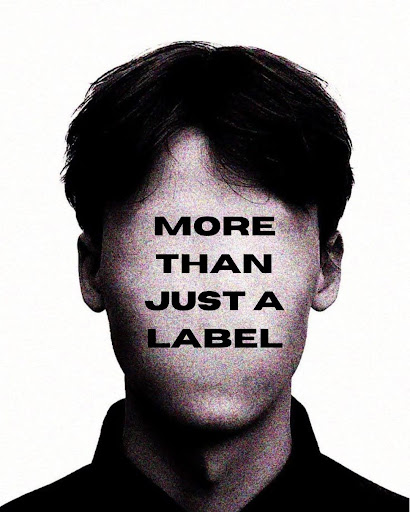
They’re more than their Label.
And maybe that’s the first step in change; not just around one issue, but across the board – changing our perspectives and the way we talk about others.
Editorial Note: This essay was by a Cohort 2 intern at the Discover Psychology Foundation and is featured in the Intern Works Exhibition.