By Zaynab Zahra Siddiqui | Discover Psychology Literary Competition & Exhibition of Works 2026
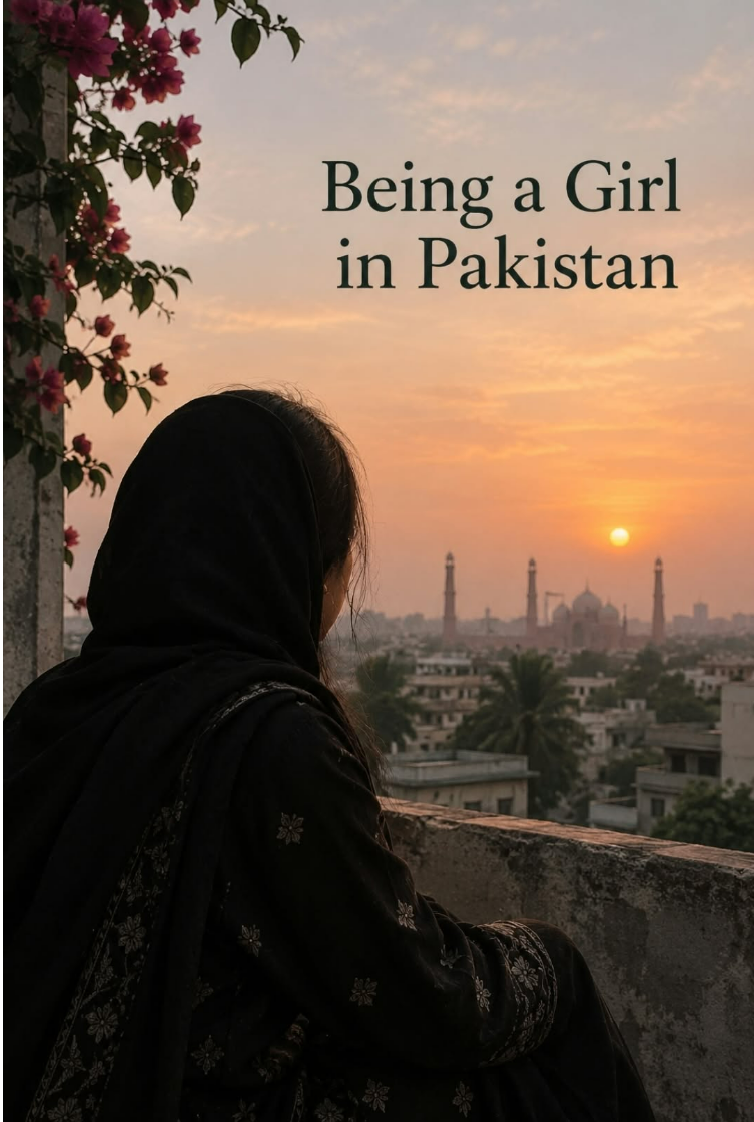
Being a girl in Pakistan meant living with many restrictions. Cover your hair. Close your leg when you sit. Walk with your head down. Don’t talk to boys. Don’t worry about it. Reputation always came before my feelings.
“What will people think?” This phrase replayed in my head every day, as I mentally listed the unspoken rules that I had to adhere to.
Depending on who you ask, these rules would have a different name. My mom called it‘ modesty’, my grandparents declared it was ‘respect ‘, my extended relatives claimed it was ‘culture,’ and my teacher told me it was ‘discipline.’
These rules, which I followed with such disdain and resentment, were rules that were never enforced on me.
Every day I would try on crop tops and mini skirts inside my room, and every day I would reach for my shalwar kameez and hijab afterwards.
Nobody told me I had to change, but I knew what would happen if I didn’t.
The excessive stares from strangers. The hostile interactions from relatives. The thought that my outfit could become a hot topic for discussion at someone else’s dinner table.
The social cost is too high to risk, so I change.
Conformity isn’t about fitting in. It’s being afraid of what would happen if you didn’t.
This authority doesn’t come from one person. It’s created by my neighbors, my teachers, my family, and random strangers whose approval seemed to matter to me.
When everyone follows the same rules, disobeying them automatically makes you a target.
How do you rebel against something that doesn’t actually exist? These invisible rules cannot be dismantled easily when they’re so silent and suffocating, yet the consequences of not adhering to the rules are catastrophic.
Thus, every morning, before I decide what to wear, I hear the same question again: “What will people think?” Except now, I start to ask:
“What would I think if fear didn’t control me?”
About the Author
Zaynab Zahra Siddiqui | Discover Psychology Literary Competition & Exhibition of Works 2026
I’m a student at TNS Beaconhouse who has always been interested in questioning people’s values and belief systems rather than just accepting them. I don’t particularly enjoy writing, yet I enjoy thinking, observing, and challenging ideas or norms that seem to be accepted without much thought. I’m very curious as to why people follow certain traditions and expectations, even when these aren’t beneficial to them. I enjoy questioning people’s long-held beliefs so they can reflect and decide whether they are useful or harmful.
[Content Disclaimer: Works published under the Discover Psychology Literary Competition & Exhibition of Works 2026 are submitted by their respective authors and do not necessarily reflect the views, positions, or perspectives of Discover Psychology Foundation. These works may explore sensitive topics, themes, or experiences. Reader discretion is advised.]