By Cohort 2 Interns
(Fizza Iman, Samia Fahim, and Fabiha Tariq)
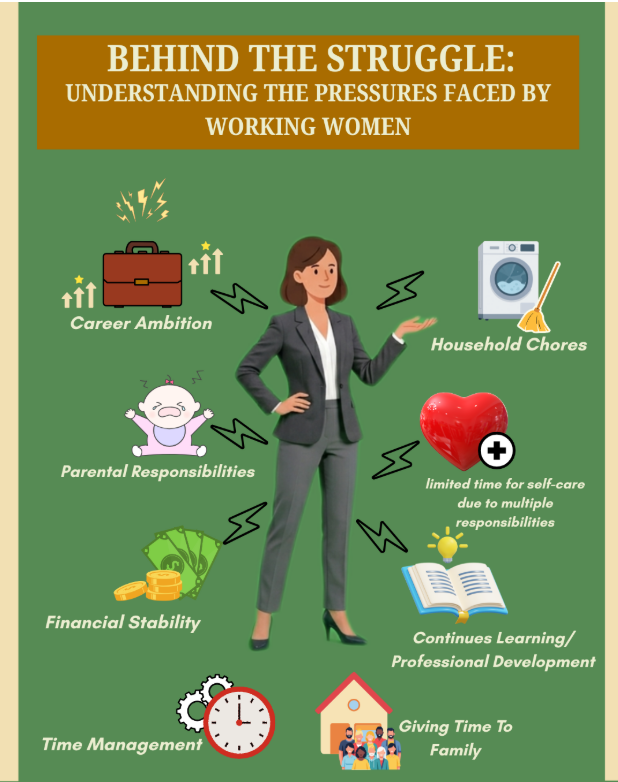
The challenge of balancing professional responsibilities with personal ones may be one of the most widespread issues facing working women in modern society. This work-life imbalance, which may stem from structural inequality and biased cultural expectations, may disproportionately affect women and may have significant consequences for their overall well-being. This article examines the multidimensional causes of this imbalance and explores the broader impact on women’s health.
The ‘composed, competent, and coping’ working woman often masks a more complex and exhausting reality. Across the globe, millions of women navigate demanding professional environments while simultaneously managing household responsibilities, including caregiving and emotional labor that sustains families and communities. This dual burden is not simply a matter of busy schedules; rather, it is a structural phenomenon embedded in gender inequality, which is reinforced by workplace cultures and insufficient social support systems.
Work-life balance can be defined as the ability to engage in professional and personal roles with equal satisfaction seamlessly. This has become an increasingly central concern in occupational health research and policy discussions. For many women, this balance remains elusive. Research published in the UCP Journal of Mass Communication describes work-life balance as an “illusion” for working women in developing countries such as Pakistan, where socio-cultural norms create particularly acute challenges (UCP Journal of Mass Communication, 2024). Meanwhile, a review published in the Future Business Journal confirms that women continue to navigate a complex transition between professional and personal commitments at a global level (Baba, Krishnan and Goswami, 2025).
One of the most well-documented reasons for women’s work-life imbalance may be the cultural expectation for women to manage both paid professional work and the majority of unpaid domestic labor. Research consistently shows that even when women are employed full-time, they continue to shoulder a disproportionate share of household chores and childcare.
A landmark review of gender and work-life conflict found that women spend approximately 13 hours more per week on unpaid domestic work compared to men (Boye, cited in NCBI PMC, 2020). Despite women’s dramatically increased participation in paid labour over the decades, this shift has not been accompanied by a proportionate increase in men’s contribution to household responsibilities.
A survey of over 1,000 pediatric hospitalists in the United States found that women reported taking on significantly more household responsibilities than their partners—with 41.4% of women reporting this compared to 8.4% of men (PubMed, 2024). In Pakistan, research highlights how cultural expectations compound this burden: women are not only expected to work professionally but are also held to traditional standards of homemaking and child-rearing, with some harsh societal judgment and mischaracterization falling on those perceived to neglect either role (UCP Journal of Mass Communication, 2024).
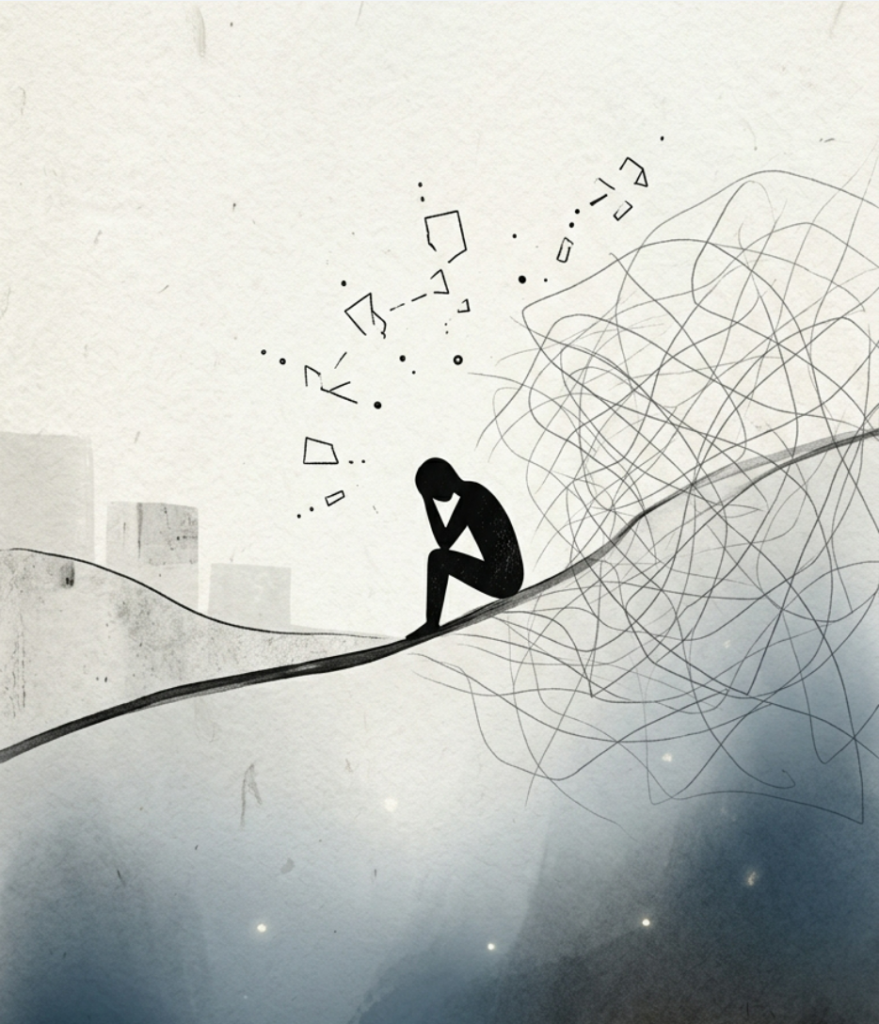
The consequences of chronic work-life imbalance extend far beyond tiredness and dissatisfaction. A growing body of evidence demonstrates a strong association between work-life conflict and serious mental health challenges like burnout, anxiety, and depression.
A psychological study of 300 professional women in high-stress occupations suggested that poor work-life balance was significantly associated with elevated stress, anxiety, and depressive symptoms. The study, published in the International Journal of Research and Scientific Innovation (2025), also identified limited organizational support and rigid workplace cultures as key contributing factors, concluding that systemic organizational changes are necessary to enhance psychological resilience among women.
Research from Pakistan’s healthcare sector sheds additional light on this issue. A research study published in the Pakistan Journal of Public Health (2024) suggests significant levels of psychological distress, especially among working women in hospitals across the country.
The World Health Organization has reinforced this global pattern, noting that poor work-life balance is associated with an elevated risk of mental health disorders, including depression and anxiety, particularly among women (WHO, cited in humanoo.com, 2024). Deloitte’s 2024 Women@Work survey of over 5,000 women across 10 countries similarly found rising workplace stress, with many women feeling unsupported by employers in balancing work and home commitments, and women who worked primarily from an office reporting the sharpest declines in mental health and productivity.
Workplace culture can play a central role in shaping whether women can effectively balance their professional and personal lives. Rigid working hours, a lack of flexible arrangements, inadequate parental leave, and the persistence of gender bias in leadership all contribute to an environment that implicitly disadvantages women.
A qualitative study of professional women in China found that barriers to work-life balance operated in both work and non-work domains, and that individual perceptions of balance varied significantly based on personal traits and social context (Pan & Sun, 2022). The study highlighted how societal expectations rooted in Confucian values, which emphasize women’s domestic roles, continue to shape the professional experiences of even highly educated and career-oriented women.
In Pakistan, the intersection of patriarchal cultural norms with inadequate workplace policy may compound disadvantage. Women working in professional settings may frequently encounter problems like long working hours, lack of childcare provisions, pay parity, and constant social pressure to prioritize family duties. Research examining women in leadership roles in healthcare identified childcare responsibility and family management as key barriers to career development and work-life balance (PubMed, 2022).
Research among female IT workers found that three key dimensions accounted for 74% of the variance in women’s satisfaction levels at work: work and family (26%), personal factors (24%), and love of their job (24%), highlighting that the challenge is multidimensional and cannot be resolved by addressing professional demands alone (NCBI PMC, 2023). Yet despite this complexity, many organizations continue to treat work-life balance as an individual rather than structural concern, placing the onus on women to manage their competing demands by better time management strategies.
The rise of digital technology and remote work has added a new dimension to this challenge. While flexible working arrangements can theoretically benefit women by reducing commute time and enabling childcare alongside professional duties, some research shows that these often come with significant downsides.
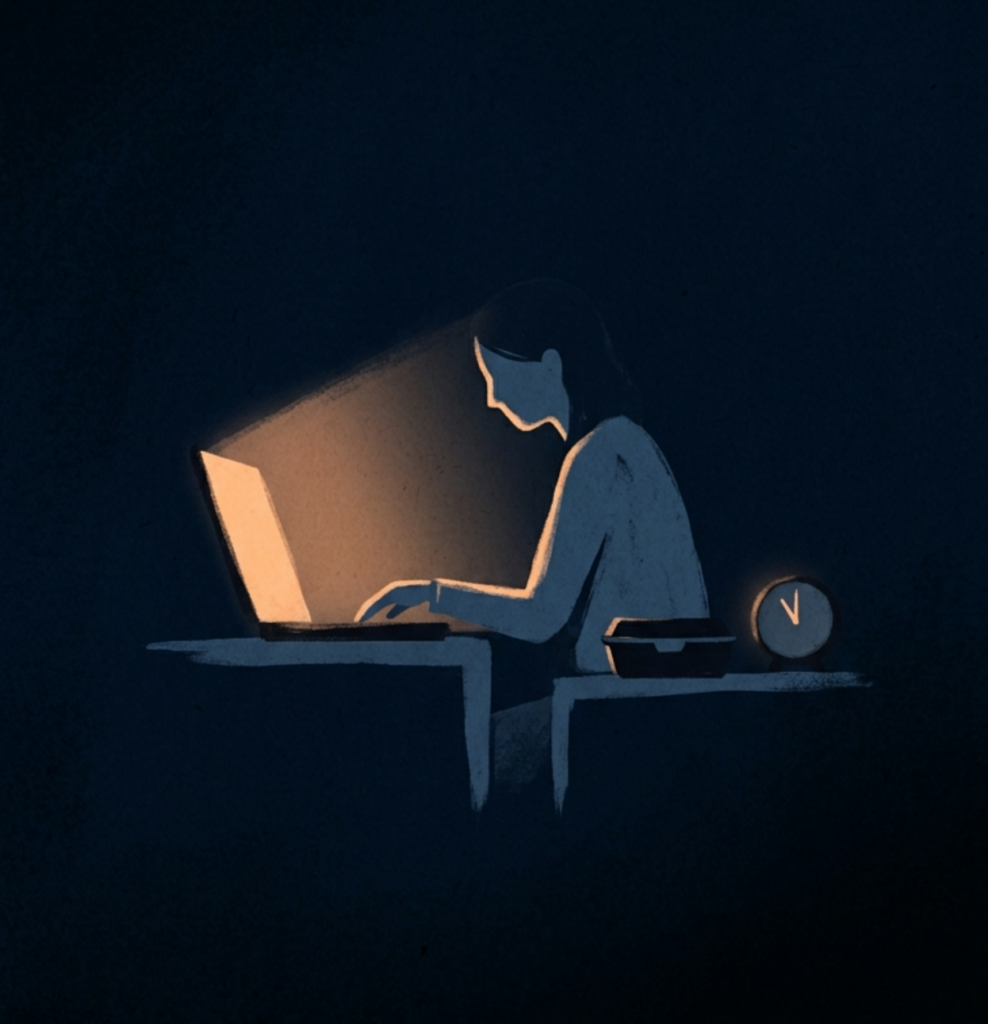
The blurring of physical boundaries between home and office has led to what researchers describe as “chronic cognitive load”—an inability to mentally disengage from professional responsibilities (IJRSI, 2025). For women, who are simultaneously expected to manage household tasks during working hours, remote work may only increase pressure. The home becomes a site of dual obligation, with professional emails and caregiving demands competing for attention in the same physical and mental space.
A study examining gender differences in remote work across South American countries found that female job satisfaction depends necessarily on reducing work stress, while men can achieve satisfaction through work-life balance and work stress together, suggesting that women’s experience of remote work is severely different and requires targeted organizational responses (Springer, 2025).
The consequences of women’s work-life imbalance extend well beyond the personal. Families, employers, and communities all bear a share of the costs. At the family level, the chronic stress experienced by mothers can affect children’s emotional development and marital relationships. Research confirms that family-work conflict and work-family conflict both result in lower life satisfaction and greater internal conflict within families (PubMed, 2021).
Employers also bear significant costs. Poor mental health contributes to increased absenteeism and higher staff turnover. A study on absenteeism among female health and social work sector employees found a clear relationship between work-life imbalance, psychological and physical health problems, and reduced productivity at work (Hwang & Jung, 2021). Organizations that fail to address these issues ultimately lose talented employees, particularly women who exit the workforce or scale back career ambitions due to unsustainable working conditions.
At the community level, the systematic exclusion of women from professional life may represent an enormous loss to economic contribution. The World Economic Forum’s research indicates that gender gaps in workplace flexibility and promotion opportunities continue to constrain women’s full participation in economic life (WEF, 2023).
Addressing the work-life balance challenge for women requires a shift away from individual coping strategies toward structural solutions. Several evidence-based approaches have demonstrated positive outcomes.
At an organizational level, the evidence strongly supports the adoption of flexible working arrangements, mental health support programs, and inclusive leadership practices. Research recommends that changes like these actively promote work-family integration (IJRSI, 2025). Mentorship and networking programs for women in leadership have also been shown to enhance work-life balance by strengthening professional confidence and social support (PubMed, 2022).
At the policy level, governments play a crucial role through parental leave legislation and subsidized childcare, including gender pay equity measures. Research comparing welfare state regimes demonstrates that countries with extensive parental leave, childcare support, and strong labor regulations see significantly reduced gender gaps in work-life conflict (NCBI PMC, 2020). Pakistan and other developing countries face an urgent need to develop and implement such policies to support the growing female workforce.
Cultural change is equally essential. Challenging the social norms that assign domestic responsibility exclusively to women may be fundamental for creating an environment where work-life balance is genuinely achievable for working women. This requires men to actively share unpaid domestic labour, and requires institutions to stop treating women’s work-life conflict as a personal problem to be managed quietly.
Working women’s difficulty in balancing professional and personal life is not a failure of individual time management or ambition; it may be a structural problem with deeper roots. The evidence is clear and consistent: women may carry a disproportionate burden of both paid and unpaid labour, face mental health consequences that are often invisible and undervalued, and operate in professional environments that were not designed with their full humanity in mind. The challenge is urgent. As more women enter professional life across the world, the cost of inaction grows. Mental health deterioration and the attrition of talented women from the workforce are outcomes that no society can afford. A more equitable future demands that employers, policymakers, communities, and families recognize that supporting working women is not a favor but a fundamental matter of justice and societal well-being. When women thrive, their entire communities may thrive with them.
References
Baba, M. M., Krishnan, C., and Goswami, N. G. (2025). A five-decade analysis of work-life balance among women through systematic literature review and bibliometric analysis. Future Business Journal. https://doi.org/10.1186/s43093-025-00584-w
Hwang, J.-H., and Jung, H.-S. (2021). The effects of work characteristics related to work–life imbalance on presenteeism among female workers in the health and social work sectors. International Journal of Environmental Research and Public Health, 18(12), 6218. https://doi.org/10.3390/ijerph18126218
Irfan, M., Sadiqa, A., Rahim, S. A., Tanveer, M., and Mumtaz, S. (2024). Psychological distress and mental well-being among working women from health care sector of Pakistan. Pakistan Journal of Public Health, 14(4), 261–269. https://pjph.org/pjph/article/view/1555
Pan, Y., & Sun, G. (2022). Exploring work-life balance among professional women in mainland China: A qualitative study. Frontiers in Psychology, 13, 938664. https://doi.org/10.3389/fpsyg.2022.938664
Sharma, M., and Kapur, S. (2022). Mental health linked with work life balance of working women. International Journal of Health Sciences, 6(S4), 1887–1899. https://pmc.ncbi.nlm.nih.gov/articles/PMC10963610/
UCP Journal of Mass Communication. (2024). Work life balance is an illusion: Exploring the challenges faced by Pakistani working women. UCP Journal of Mass Communication, 2(2), 26–51. https://ojs.ucp.edu.pk/index.php/ucpjmc/article/view/420/176
World Health Organization. (2024). Work-life balance and women’s mental health. Cited in Humanoo. https://humanoo.com/en/magazin/impact-work-life-balance-health/
Yusuf, A. et al. (2025). Work-life balance and mental health: A psychological study of professional women in high-stress occupations. International Journal of Research and Scientific Innovation, XII(V), 1617–1625. https://pubmed.ncbi.nlm.nih.gov/40280022/
Editorial Note: This article was developed as part of a collaborative editorial group task by Cohort 2 interns at the Discover Psychology Foundation and is featured in the Intern Works Exhibition.