By Laila Kulsoom | Discover Psychology Literary Competition & Exhibition of Works 2026
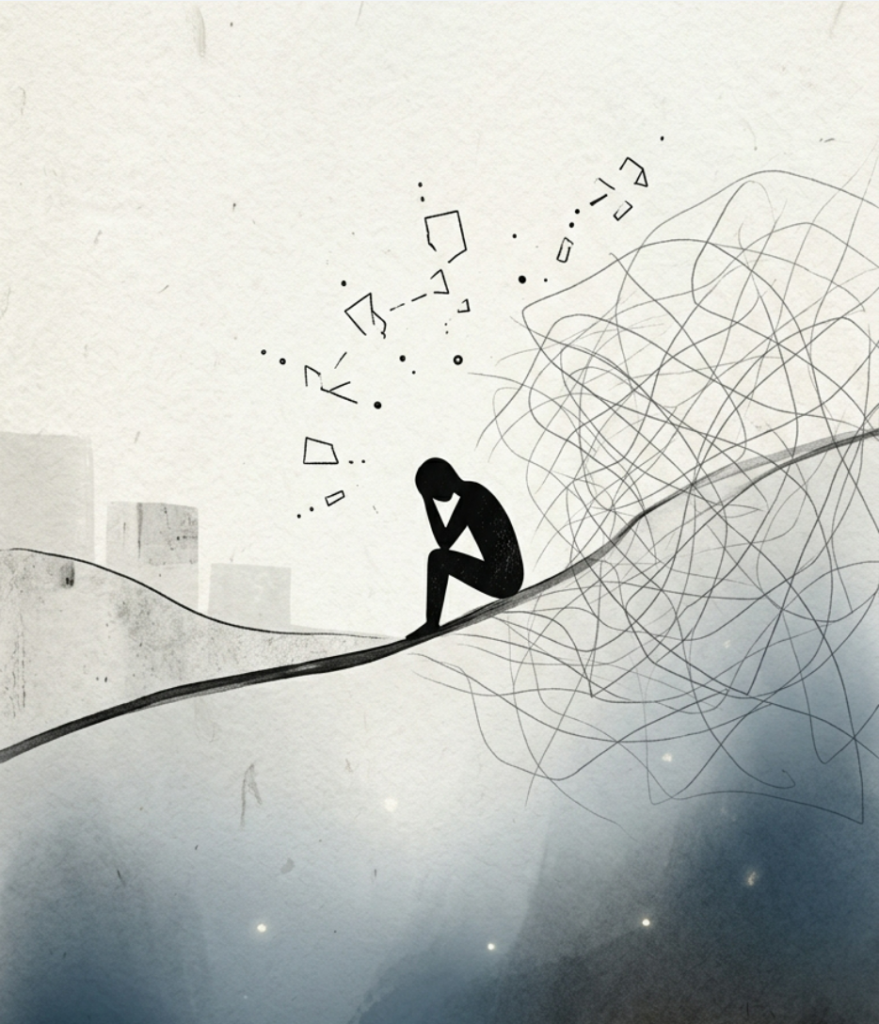
Trivializing abnormalities is normal in the sub continent, just like mental health is taken for granted by a significant number of people. The word “majnun” means crazy in Arabic, and in the sub continent it is often branded to individuals whose brain wiring works differerlty from the rest of the population. Frequent ridicule and taunting of the mentally disabled in families due to rigid stigma in society, has become normalized. These factors are then transferred culturally across generations. Since it is a deep-rooted societal prejudice, people with real mental health issues often are systematically marginalized or engage in self-deception to avoid approaching professional help, which results in affects to relationships, personal goals, daily routine, and overall quality of life. In contrast to the reality of the issue, almost every group and culture in Pakistan perceives mental illnesses as paranormal activities. And consult spiritual quacks instead of clinicians to find cures for their problems. This is still happening in the year 2026, which clearly indicates the outcome of a lack of education and awareness among the individuals. Society perceives children with one extra 21st chromosome (Down syndrome) and with neurodevelopment conditions as inherently incapable of achieving something in their lives. They are treated differently when they just need someone to walk beside them in every step of life; a little support can help them achieve milestones. In schools, neglect is what they get from their peers and teachers even among those who are going through learning disabilities such as dyslexia, dyscalculia, dysgraphia, and instead of creating space for understanding, they are stereotyped with different derogatory names. This practice is common in a majority of schools in Pakistan, so authorities should take strict actions against this. Appointment of psychologists and special educators should be made obligatory for educational institutes, both government and private. Along with this, in order to create a respectful and empathetic teaching environment for each child, mental health workshops or seminars should be held in every institutation, which will be helpful in allowing teachers with different academic backgrounds to identify which student needs professional help and support to let them thrive academically and socially. In 2010, after the lapse of federal mental health ordinance led to the decentralizationion of provisional level ordinances. Till date, each province has enacted a mental health act, there is a huge gap in implementation of them. This makes those with mental disorders vulnerable to human rights abuses due to lack of appropriate safeguards (Taree et al., 2016). The absence of a central authority for mental health to check and balance ethical practice in independent entities and, imperatively, awareness of mental illnesses, especially in remote areas. Has contributed indirectly in increasing rates of crime and sexual violence. This suggests that the unspoken needs and hidden desires come out in the ugliest of ways. The absence of proper settings for psychological aid, and ignoring red flags or problematic behaviors of child during their growing age in society, can produce people like Javed Iqbal, a psychopath and homicidal pedophile who was convicted of murdering 100 innocent young boys between 1999 and 2000 for revenge against police and societal mistreatment. After 21 years, in 2021, society produce Zahir Jaffer, who murdered an innocent girl named Noor Mukadam in a very brutal way one could not even imagine. He tried to hide from the legal system by using mental disorder as a shield; luckily, the court dismissed the claim since there was no evidence of it. WHO (2017) stated that there are 27 million citizens of Pakistan suffering from various kinds of mental illnesses. This, however, is a very wide underestimation, and many cases have gone unreported out of fear of social ostracism, especially in rural and tribal belt regions where data collection is virtually impossible. Still, this enormous figure indicates a vulnerable situation where, for example, siblings are being compared by parents. This can lead to such psychological traumas as chronic anxiety, low self-esteem and imposter syndrome—all of which can remain deep-seated and affect children well into adulthood. Racism on the basis of skin colour is a common phenomenon in Pakistan, and fair skin people often get preference in marriages, and social circles, while darker skin people may have internalized feelings of inferiority, which lead to body dysmorphic disorders and clinical depression. Body shaming has been so normalized that it is often disguised as “well-intentioned advice” from family members, and goes on to cause eating disorders, social isolation, and suicidal thinking in teens. Another vital contributor is the stress of work-life balance, as average Pakistani employees work too much under unethical working conditions, have little job security, no psychological support, and no legal recognition for mental health days. This leads to irritability and broken family relationships. The impact of peer pressure, particularly in the youth, can be seen from the unhealthy comparisons in society through social media, where idealized social media profiles set standards of success, beauty, and happiness that become benchmarks for the image of others. This causes people to feel an ongoing lack of achievement, a lack of beauty, and a lack of happiness. Arguably, one of the most accepted and harmful causes, is academic pressure, as parents push their children into high-stakes tests for, medical and engineering professions, while ignoring their innate abilities, and using harsh verbal or physical reprimands for the failure to perform well in school, which has been linked directly to the spike of student suicides in certain cities such as Lahore and Karachi. The unrealistic expectations of in-laws from a new family member, especially a daughter-in-law, results in a suffocating atmosphere where young women are expected to take on: household responsibilities, have children right after marriage, and suppress their own desires, which can lead to: postpartum depression, adjustment disorders, and even self-immolation. These are just a few possibilities, or honor-related violence. Most importantly, there is no bereavement counselling or psychological first aid for loss, separation, or death of a loved one in Pakistan, with people exspect to suppress their emotion. These emotions eventually lead to a complicated grief disorder or substance abuse or psychosomatic conditions such as chronic headaches or gastrointestinal problems. Even people still stay away from getting professional help, and it’ll take years for them to get rid of the stigma of society. But destigmatisation is not enough without parallel structural reforms to make mental health a part of primary health, training GP’s as depression and anxiety screeners during routine checkups, and starting mass media campaigns in Urdu and regional languages, which portray seeking treatment as a mark of strength, not weakness there can’t be real progress. Is it not alarming that Pakistan stands among those countries which will be impacted by climate change, it is no secret that in every year the lives of masses and quality of their lives, including health, emotional wellbeing, and interpersonal relationships, are affected by flash floods in Punjab and Sindh and landsliding in the northern areas. Climate-induced displacement has already driven millions to flee their homes, disrupted social support systems, and destroyed livelihoods on farms, exposing them to successive loss and uncertainty and increased hardships in refugee camps where there are no mental health services. Famine can make it worse and worse, because hunger can directly affect one’s ability to think, as well as make them more irritated. more prone to interpersonal conflict, and raises cortisol levels, worsening existing psychiatric illnesses such as schizophrenia and bipolar disorder. Furthermore, the climate crisis and mental health are linked in a vicious circle: poor communities exposed to climate destruction are more likely to engage in measures to cope that include domestic violence, child marriage, and child labor, which in turn are likely to further affect the mental health of the next generation, which then are linked to intergenerational mental illness. This is exacerbated by the absence of infrastructure for climate resilience, including early warning systems, and drought-resistant crops, which leaves populations living in a state of hypervigilance and chronic stress, known as “ecological grief” or “solastalgia” by psychologists—an anguish resulting from the changes in the environment in one’s home country. Furthermore, the urbanization of Pakistani cities with their overcrowded housing, noise pollution, and lack of green spaces has been scientifically correlated with increased cases of anxiety, aggression, and attention deficit disorders, but urban planning authorities regularly go to great lengths to ignore such mental aspects of health. To meet these complex challenges, Pakistan is in need of a National Mental Health Authority to ensure ethical standards, audit psychiatric hospitals, and punish violations, as recommended by the WHO but never clarified into legislation, and a proper budget provision of 2% of the national health expenditure. Programs that teach community members to deliver mental health services, under the leadership of trained community psychosocial support workers, can also help address the cultural and language barrier to mental health services and make therapy more accessible and acceptable in conservative settings where outsiders are not trusted. Schools need to have anti-bullying policies, as well as inclusive curricula, including emotional intelligence lessons and counselling cells for students to report distress, without involving their parents, this can help to identify early signs of turmoil that can escalate into a crisis. Corporate and governmental organizations should have employee assistance programs (EAPs) that provide free, confidential therapy sessions, flexible working hours, and required mental health training for managers to identify signs of burnout and compassion fatigue. Moreover, faith-based interventions, which are already highly accepted in Pakistani society, can be combined with contemporary psychiatry through training imams, priests, and spiritual leaders to detect serious mental illnesses and refer them to psychiatrists instead of prescribing exorcisms or harmful fasting. The media and entertainment industry can play a big role in creating dramas, films, talk shows to bring up positive images of the patients seeking therapy, stop the stereotype of the “majnun” being dangerous or possessed, and present recovery stories which inspire hope. Legal changes should also eliminate the loopholes that enable families to lock up mentally ill people in chains and dungeons and take them to so-called “madrasas” with no license for it, and have the human rights commissions and independent psychiatrists regularly visit and inspect them. A simple and powerful intervention is to encourage an active listening culture within families so that people can voice their sadness, anger, fear without being disbelieved or shamed. Peer support groups for caregivers of mentally ill patients can be beneficial in mitigating caregiver burnout, which in Pakistan is alarmingly high because there are no respite care facilities. Lastly, making mental health literacy a component of the national school curriculum at primary through higher secondary schools by educating children about basic emotions, coping mechanisms, and when to seek help, can have a significant impact on the perception of mental illness in the next generation, thereby preventing the stigma of today from becoming the passed-down trauma of tomorrow. It is not too late to fix the situation and make all the citizens, irrespective of their neurological wiring, socioeconomic background, or geographical location, feel validated, heard, supported, and most importantly, valued as a human being deserving dignity and care with better planning, collaboration of various stakeholders, political will, and continued public awareness building.
About the Author
Laila Kulsoom | Discover Psychology Literary Competition & Exhibition of Works 2026
Hello
I am Laila kulsoom a graduate in psychology, writing and expressing thoughts was always my way of connecting with humans and I believe that’s the most impactful way of conveying your message through the power of words which hold emotions and also you can polish your thought process through writing…thanks
[Content Disclaimer: Works published under the Discover Psychology Literary Competition & Exhibition of Works 2026 are submitted by their respective authors and do not necessarily reflect the views, positions, or perspectives of Discover Psychology Foundation. These works may explore sensitive topics, themes, or experiences. Reader discretion is advised.]