by Dur e Mufasarah
Layla had just finished college and was now waiting for her results. After years of rushing between assignments, exams, and house chores, life finally felt quiet. For the first time in a long while, she could rest. She spent her days watching the movies that had long lived on her bucket list, scrolling through social media, and doing household tasks only when she felt like it.
At first, the freedom felt wonderful.
Slowly, though, the days began to blur into each other.
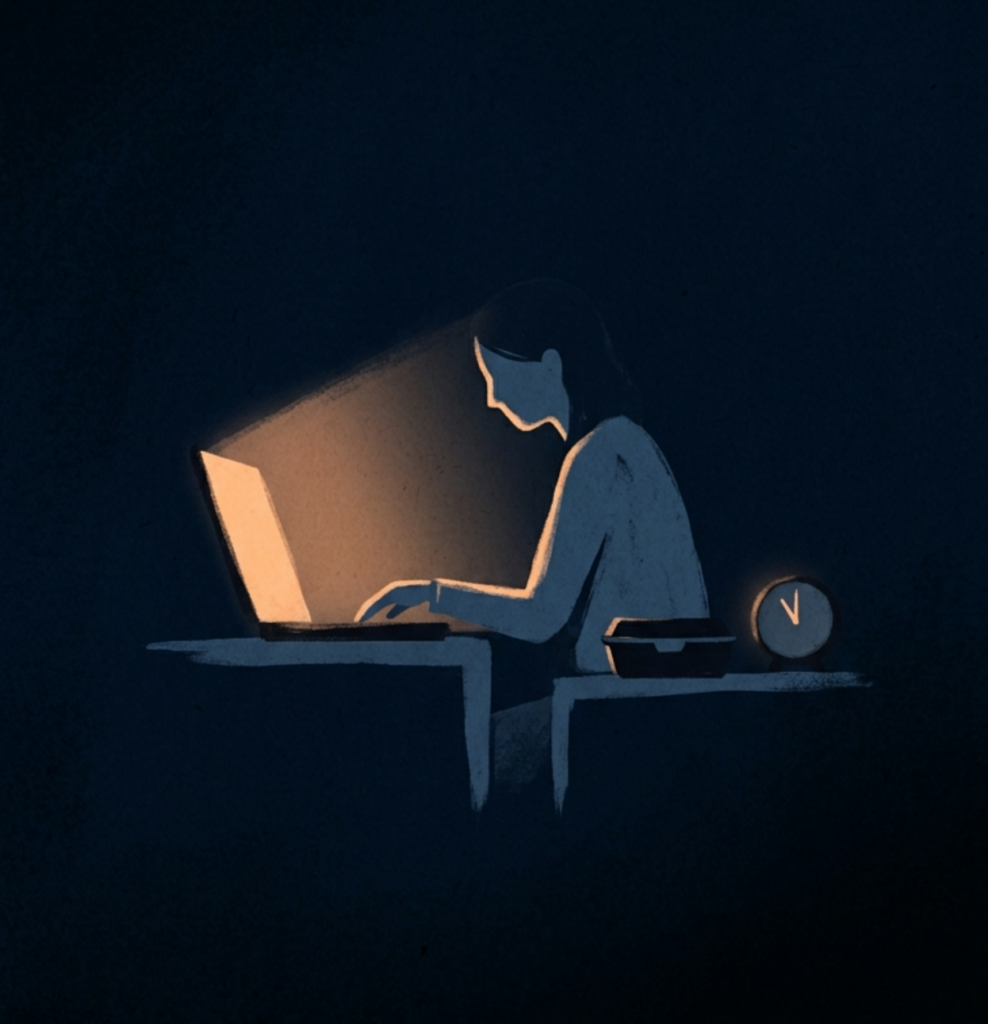
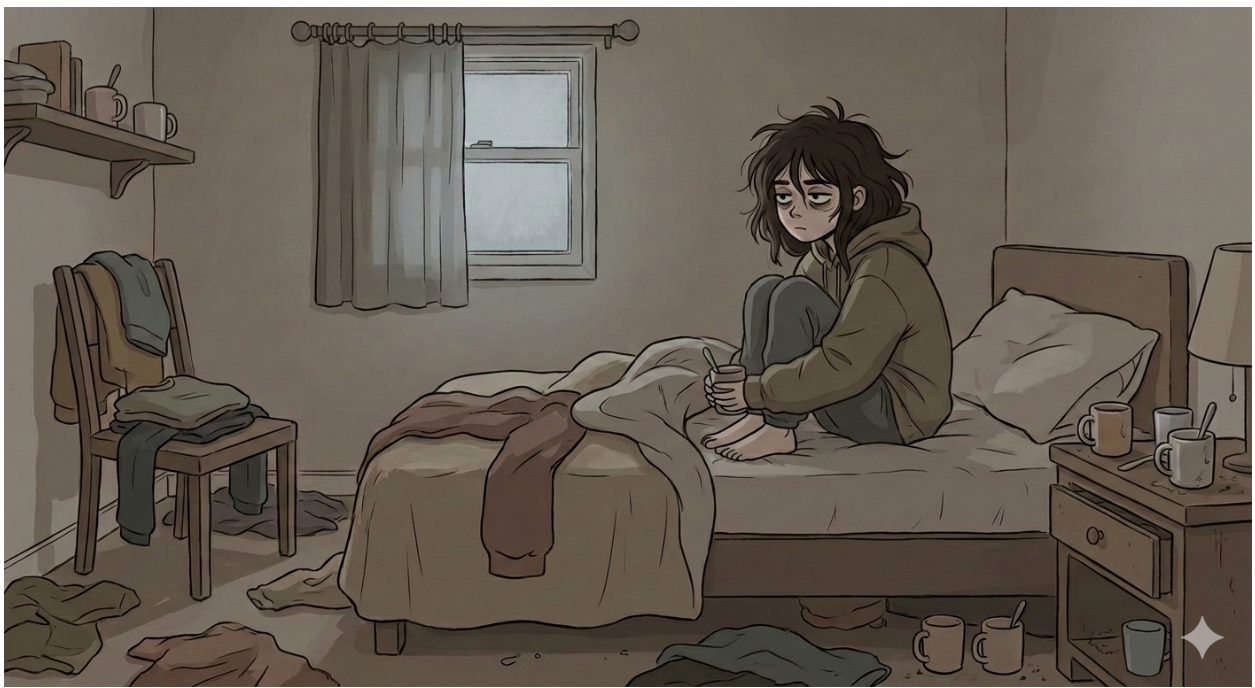
Layla began to feel unusually tired, even on days when she hadn’t done much. A strange heaviness followed her, subtle at first, then harder to ignore. She woke up late, skipped meals without meaning to, slept at odd hours, and told herself she would “get back on track tomorrow.” Tomorrow kept drifting further away.
Her dark circles deepened. Her body felt sluggish. Her clothes fit differently. The room around her shifted almost unnoticed; first a little untidy, then unfamiliar. Clothes rested on chairs instead of hangers. Cups stayed on the table longer than intended. Dust gathered quietly in the corners. The Layla who once liked clean spaces and clear mornings now lived among reminders she kept promising to deal with later.
One afternoon, her friend Sara came over to invite her to her brother’s wedding.
When Sara stepped inside, she paused. The room looked different — not wrong, just distant from the Layla she knew. She didn’t comment. She simply sat beside Layla, smiled, and began chatting as usual.
They laughed, talked, and reminisced. Yet as the minutes passed, Sara sensed something beneath the surface. Layla laughed at the right moments, but her energy felt muted, as if her body was present while her thoughts lagged behind. Nothing dramatic had happened in her life. Still, she seemed overwhelmed, easily irritated, and tired in a way that sleep alone didn’t fix.
Finally, Sara gently asked, “Layla… are you really okay?”
The question startled Layla, not because it was harsh, but because it was honest.
“Yes,” she said quickly. “Why?”
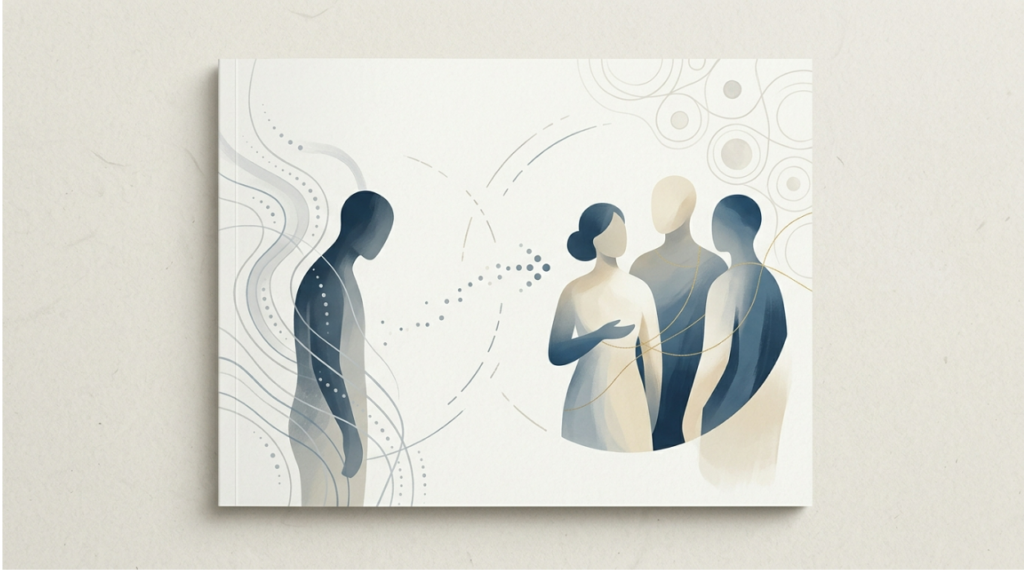
Sara spoke softly. “You’ve always liked a bit of structure. You take care of your space, and yourself. Lately, you seem weighed down. I’m not saying anything is wrong, I just wanted to check in.”
She didn’t offer advice or judgment. She only added, “Maybe your days could use a little shape again. Not perfection. Just something kind and steady.”
The words stayed with Layla long after Sara left.
That evening, Layla looked around her room more closely than she had in weeks. The mess wasn’t shocking; it was quiet and accumulated. She noticed the dishes waiting by the sink, the dust on the shelves, the clothes folded halfway and abandoned. When she caught her reflection in the mirror, she didn’t criticize it. She simply noticed how tired she looked.
That evening, she made a small promise to herself — not to change everything, just to begin paying attention.
The next morning, she began small. She opened the windows and let the sunlight spill in. She cleaned one corner, then another, stopping when she needed to. It took longer than she expected. When she finally finished, the room felt lighter — not perfect, just clearer.
After a warm bath, she sat at her study table and let her thoughts wander.
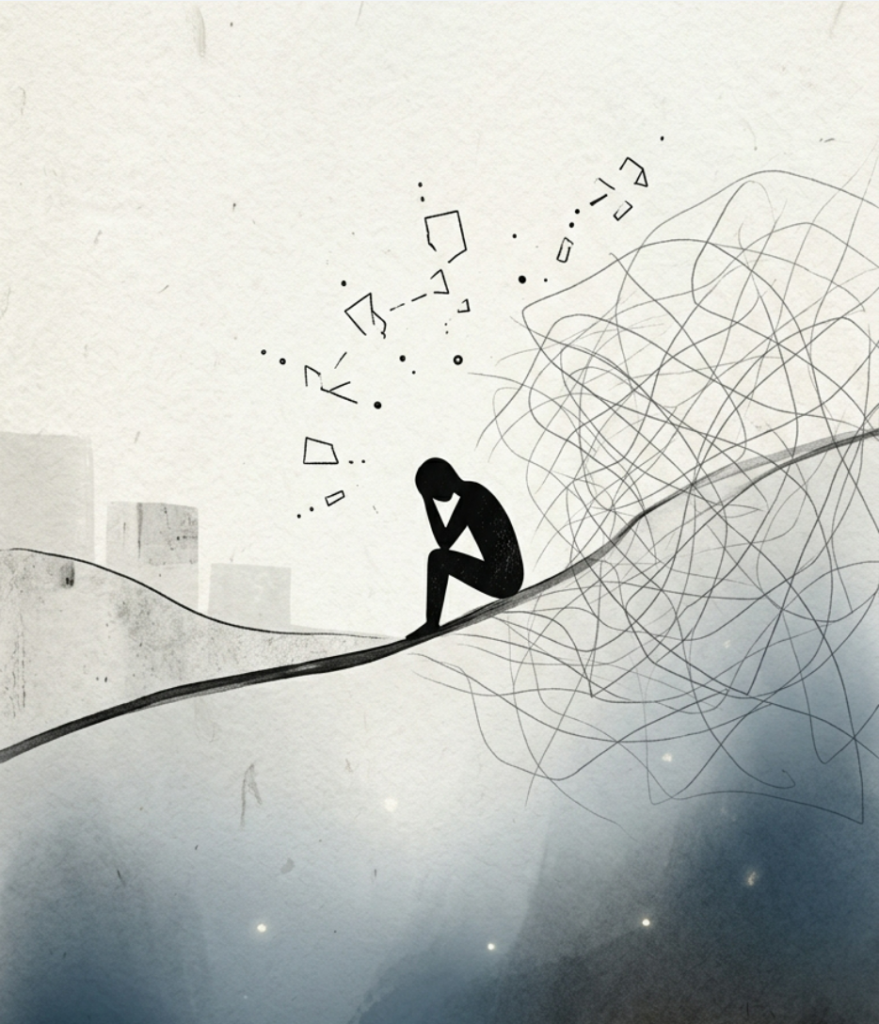
Nothing in her life had suddenly gone wrong. But between finishing exams, losing daily structure, spending more time alone, and drifting through unplanned days, something had slowly shifted.
Routine hadn’t been the only thing holding her together, but its absence had made everything feel noisier.
The idea of “fixing” her life felt overwhelming. So she didn’t try.
Instead, she wrote down three small intentions — not rules, not solutions, just anchors:
- Aim to sleep around 7 hours most nights.
- Take a short walk without your phone, just to notice your surroundings.
- Read even one page a day — just something you enjoy.
The first week wasn’t magical. Some days she forgot. Some days she felt unmotivated. Other days, she managed one small thing and let the rest go. Gradually, she noticed quiet changes. Morning light felt gentler. Her thoughts tangled less. She smiled without forcing it. She started making to-do lists that were realistic, not punishing. She spoke to Sara more often. Rest no longer felt like failure, and effort no longer felt like pressure.
Her routine didn’t solve everything. Life still surprised her, tired her, and tested her. But it gave her something steady to return to.
Layla realised something important:
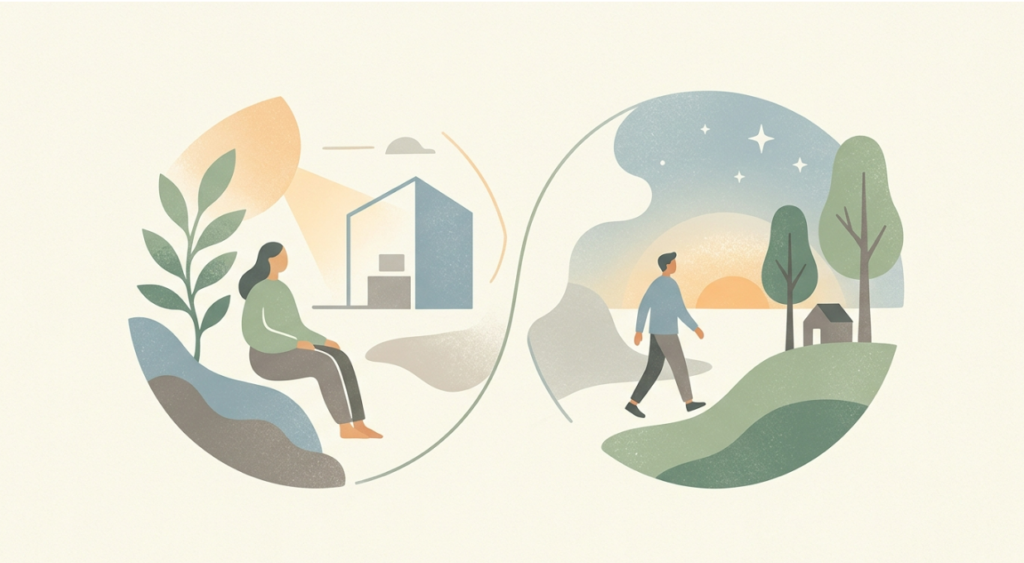
Routine was not a cage.
It was a path, one that helped her move through her days with a little more balance, patience, and care.
And for the first time in a long while, she wasn’t just letting time pass.
Her days had shape again — and she was living inside them.

References:
- Moebus, M., Holz, C. Beyond the hours slept: inconsistent sleep routines threaten mental health in 100,000 UK Biobank participants. BMC Public Health 25, 4009 (2025). https://doi.org/10.1186/s12889-025-24794-7
- Liu, H., Tao, T.J., Chan, S.K.Y. et al. Daily routine disruptions and psychiatric symptoms amid COVID-19: a systematic review and meta-analysis of data from 0.9 million individuals in 32 countries. BMC Med 22, 49 (2024). https://doi.org/10.1186/s12916-024-03253-x
- Brown, Kristen, “The Rhythm of Your Life: The Effects of Daily Routine on Mental Health” (2022). Graduate Research Projects. 98. https://knowledge.e.southern.edu/gradnursing/98
Editorial Note: This short story was developed by a Cohort 1 intern at the Discover Psychology Foundation and is featured in the Editorial Internship Exhibition.